Rib Cage Anatomy / Thoracic rib cage anatomy in detail anterior view - The head of the rib includes the articular surface, facies articularis capitis costae.
Rib Cage Anatomy / Thoracic rib cage anatomy in detail anterior view - The head of the rib includes the articular surface, facies articularis capitis costae.. The thoracic cage (rib cage) is the skeletal framework of the thoracic wall, which encloses the thoracic cavity. Womens body parts stomach 4 photos of the womens body parts stomach body diagram stomach, body parts digestive system, body parts in stomach area, body parts liver, body parts spleen, human body parts stomach, woman body organs, woman body parts found, stomach, body diagram stomach, body parts digestive system, body. It is supported by the vertical sternum or breastbone (anteriorly) and the 12 thoracic vertebrae. And the front part of the rib. The thoracic cage protects the heart and lungs.
As part of the bony thorax, the ribs protect the internal thoracic organs. The ribs are curved, flat bones which form the majority of the thoracic cage. And the front part of the rib. The thoracic cage (rib cage) is the skeleton of the thoracic wall. Lateral view of a pair of ribs articulating with the thoracic vertebrae.
Rib cage anatomy, 19th C illustration - Stock Image - C029 ... from media.sciencephoto.com The head of the rib includes the articular surface, facies articularis capitis costae. The ribs are a set of twelve paired bones which form the protective 'cage' of the thorax. The thoracic cage consists of the 12 thoracic vertebrae, the associated intervertebral discs, 12 pairs of ribs with their costal cartilages, and the sternum. The thoracic cage (rib cage) forms the thorax (chest) portion of the body. It consists of the 12 pairs of ribs with their costal cartilages and the sternum (figure 1). Structure of the ribcage and ribs. There are twelve pairs of ribs, all of which articulate with the vertebral column. Together with the sternum, thoracic vertebrae, and costal cartilages, the ribs form the thoracic cage, also called the bony thorax.
Each pair is numbered based on their attachment to the sternum, a bony process at the front of the rib cage which serves as an anchor point.
Animated full human body anatomy. The thoracic cage protects the heart and lungs. The thoracic cage (rib cage) is the skeletal framework of the thoracic wall, which encloses the thoracic cavity. In this video we discuss the structure of the rib cage or thoracic cage. At the chest, many rib bones connect to the sternum via costal cartilage,. And the front part of the rib. They are extremely light, but highly resilient; The ribs are curved, flat bones which form the majority of the thoracic cage. From the anatomy of the human rib cage, we can tell that the human ribs bones have several parts: The thoracic cage (rib cage) forms the thorax (chest) portion of the body. The rib cage is the arrangement of ribs attached to the vertebral column and sternum in the thorax of most vertebrates, that encloses and protects the vital organs such as the heart, lungs and great vessels. They articulate with the vertebral column posteriorly, and terminate anteriorly as cartilage (known as costal cartilage). But for an anatomy study, it's not.
And more specifically, the rib cage is an egg with planes. Human muscles · april 17, 2020. It consists of the 12 pairs of ribs with their costal cartilages and the sternum (figure 1). The first rib is attached to thoracic vertebra. The thoracic cage (rib cage) is the skeleton of the thoracic wall.
Rib Cage Visible - The Visible Body Blog | 3D skeletal ... from www.visiblebody.com Lewis (1918) gray's anatomy 20th ed (in public domain at yahoo or bartleby) images: It is made up of 12 pairs of ribs. And more specifically, the rib cage is an egg with planes. But for an anatomy study, it's not. The ribs are curved, flat bones which form the majority of the thoracic cage. Contributing to their role in protecting the internal thoracic organs. As part of the bony thorax, the ribs protect the internal thoracic organs. Human ribs are flat bones that form part of the rib cage to help protect internal organs.
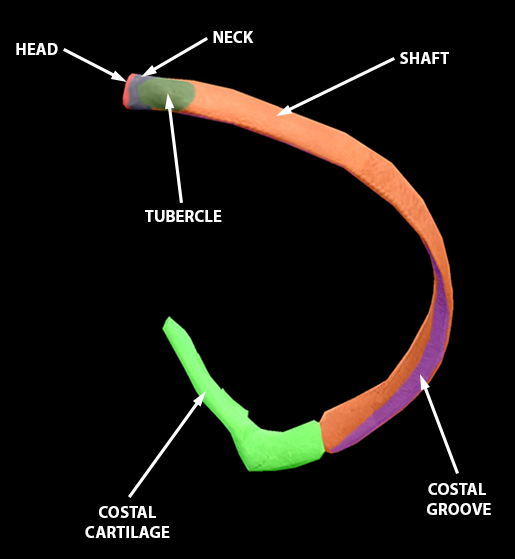
Head (caput costae) neck (collum costae) body, corpus costae;
The top edge of the manubrium has a depression called the suprasternal or jugular notch. However, only seven have a direct articulation with the sternum. The thoracic cage protects the heart and lungs. As part of the bony thorax, the ribs protect the internal thoracic organs. It may occur after an obvious injury or without explanation. The thoracic cage (rib cage) forms the thorax (chest) portion of the body. The head of the rib includes the articular surface, facies articularis capitis costae. The rib cage is more like an egg because the top is narrower than the bottom. The ribs are a set of twelve paired bones which form the protective 'cage' of the thorax. Animated full human body anatomy. We cover the different bones that make up the rib cage and some of the functions of. Humans usually have 24 ribs, in 12 pairs. The thoracic cage (rib cage) is the skeletal framework of the thoracic wall, which encloses the thoracic cavity.
The ribs are a set of twelve paired bones which form the protective 'cage' of the thorax. Anatomy the rib cage is a bony structure found in the chest (thoracic cavity). Animated full human body anatomy. Introduction to the structure of the ribcage and ribs: It is formed by the 12 thoracic vertebrae, 12 pairs of ribs and associated costal cartilages and the sternum.
Rib Cage Diagram With Organs - Human Anatomy Body from www.anatomylibrary99.com Lewis (1918) gray's anatomy 20th ed (in public domain at yahoo or bartleby) images: Introduction to the structure of the ribcage and ribs: And the front part of the rib. It's designed to move with respiration, the ribs rising and lowering with each breath, thus increasing the capacity of the chest cavity while reducing its pressure. Instead, anatomists classify the ribs as flat bones, and they are located within the axial skeleton. Head (caput costae) neck (collum costae) body, corpus costae; Review the anatomical characteristics of the rib and ribcage in this interactive tutorial and test your knowledge in the quiz. In this video we discuss the structure of the rib cage or thoracic cage.
From the anatomy of the human rib cage, we can tell that the human ribs bones have several parts:
The rib cage is the arrangement of ribs attached to the vertebral column and sternum in the thorax of most vertebrates, that encloses and protects the vital organs such as the heart, lungs and great vessels. Structure of the ribcage and ribs. Rib cage pain can be caused. At the chest, many rib bones connect to the sternum via costal cartilage,. We cover the different bones that make up the rib cage and some of the functions of. It is made up of 12 pairs of ribs. The thoracic cage protects the heart and lungs. In this video we discuss the structure of the rib cage or thoracic cage. The thoracic cage consists of the 12 thoracic vertebrae, the associated intervertebral discs, 12 pairs of ribs with their costal cartilages, and the sternum. Rib cage anatomy the rib cage, shaped in a mild cone shape and more flexible than most bone sets, is made up of varying elements such as the thoracic vertebra, 12 equally paired ribs, costal cartilage, and held together anteriorly by the sternum. They are extremely light, but highly resilient; As part of the bony thorax, the ribs protect the internal thoracic organs. It may occur after an obvious injury or without explanation.





No comments:
Post a Comment